


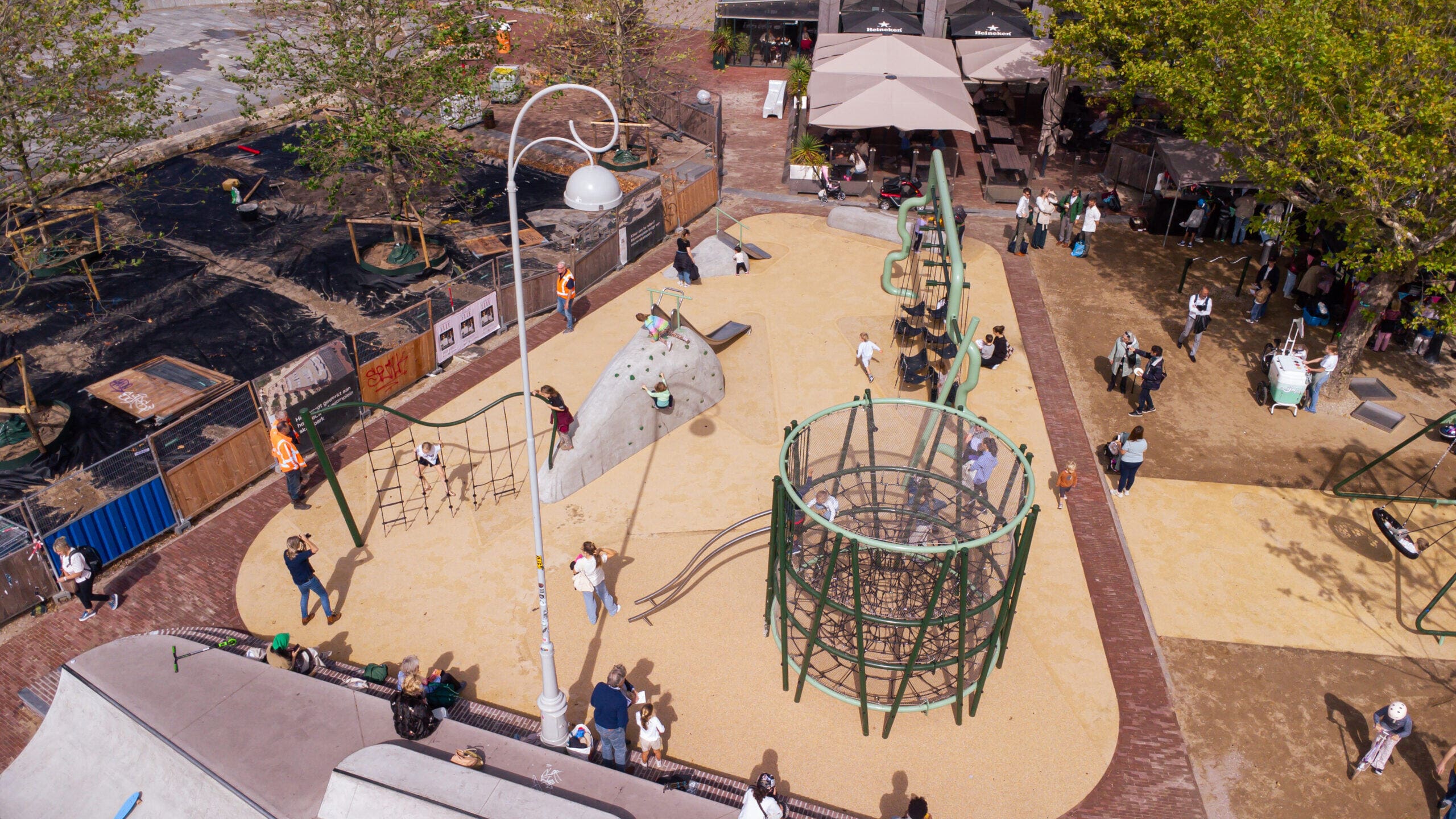
Amsterdam’s Museumplein is one of the most recognisable places in the Netherlands. Every day, thousands of visitors walk between the Rijksmuseum, the Van Gogh Museum and the Concertgebouw. But recently, there’s a new reason to pause for a moment: a brand-new BOERplay playground, where children of all ages can explore, move and make music together: right in the middle of one of the country’s most culturally historic settings.
What makes this play area truly special is its location and its unique design. Curious about how it came to life? From tender process to concept development, from the first sketches to the final realisation: this is the story of how BOERplay created an artistic, multifunctional play space that blends seamlessly into its surroundings.
From tender to design: a blank canvas in the heart of the city
When the municipality of Amsterdam issued a tender for a new play area on Museumplein, the brief was clear: create a space that reflects the cultural character of the square, encourages interaction, and is genuinely accessible to everyone. Ronald de Bruijn, consultant at BOERplay, recalls the start of the process:
“We developed a concept for the tender ‘the ode to the Concertgebouw’ and won the tender unanimously. After that, we refined and improved the design together with the municipality until everyone was fully satisfied.”
That was the moment Sanne Bullens, landscape designer at BOERplay, joined the project, becoming an essential link in developing both the concept and the full landscape design.
“The location called for a design that would strengthen the environment while also stimulating children to play. Art and music are present everywhere on Museumplein, and that needed to be reflected in the play area.”
Together with Melissa Stigter, product designer at BOERplay, Sanne shaped a vision that was both aesthetically and functionally coherent; an effective collaboration between landscape and product design.
A concept rooted in art, music and movement
During the creative phase, the idea emerged to incorporate the cultural surroundings—and the presence of the Concertgebouw in particular—into a musical play environment. This concept developed naturally between Melissa and Sanne. Sanne:
“The idea for musical elements really grew together. Children create the music in the playground—they become the orchestra with their enthusiasm.”
Melissa: “The double bass is both a play structure and an art piece. From one angle you see an instrument; from another, you see a climbing structure.”
This led to a final collection of play elements centred around music:
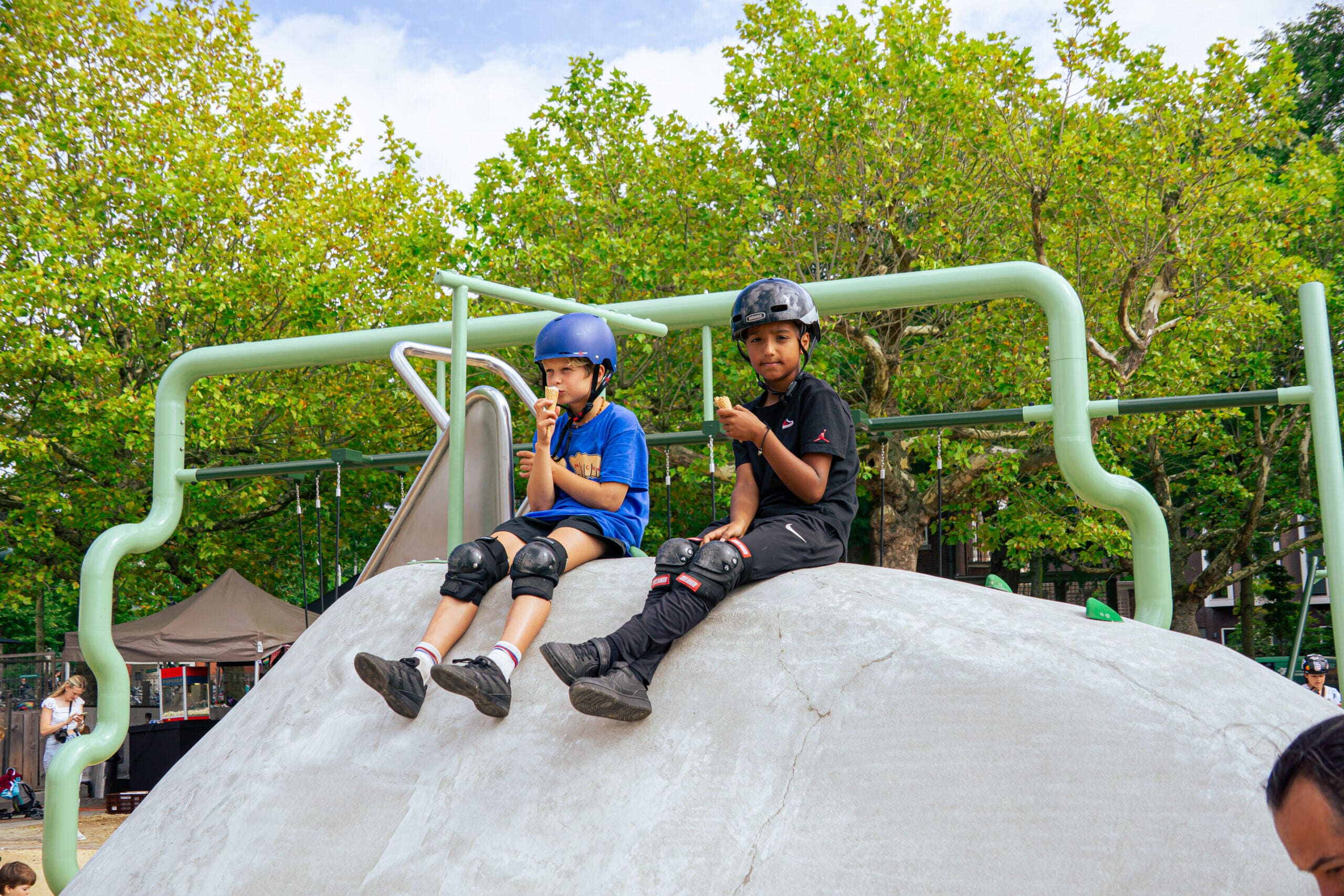
Climbing Rock – a physical, adventurous challenge
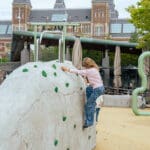
The large climbing rock forms a rugged counterpart to the artistic instrument structures.
- Children climb using grips, scrambling routes and natural forms.
- At the top, the tall slide awaits, with views over the square and the Rijksmuseum.
- It serves as a central element that truly challenges older children.
This creates excitement within an otherwise refined play area, appealing to multiple age groups at once.
Double Bass – art object and climbing structure
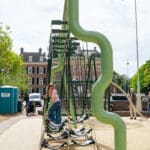
- From one side, it resembles a lifelike instrument; from another, it becomes a sculptural form that blends into the square.
- It features climbing routes, balance challenges and play elements for various ages.
- Its shape invites discovery and photography—an unexpected eyecatcher enriching the square without dominating it.
Harp – climbing between the strings
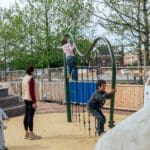
welcoming structure that allows children to scramble from left to right.
- The ‘strings’ invite grasping, hanging and crossing.
- The stepping stone adds extra motor challenge.
- The incline beside the entrance makes it accessible for wheelchair users—a deliberate choice in line with BOERplay’s inclusive vision.
Flute – playful, light and accessible
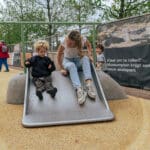
Designed for younger children, yet offering surprising depth in play value.
- Its low height ensures safety for toddlers.
- Elements encourage climbing, gripping and small jumps.
- Detail: atop the climbing rock sits a bar that subtly references the shape of a flute—a little visual joke children often discover while playing.
Drum – cooperation and interaction
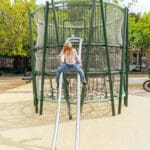
The drum is designed as an open and transparent structure.
- Climbable nets stimulate cooperation and safe movement.
- The mesh provides a sense of security.
- A built-in ‘speaking tube’ allows children to communicate, sparking social play and lots of laughter.
Musical Notes – playful and motorically challenging
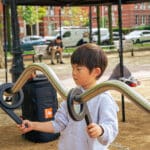
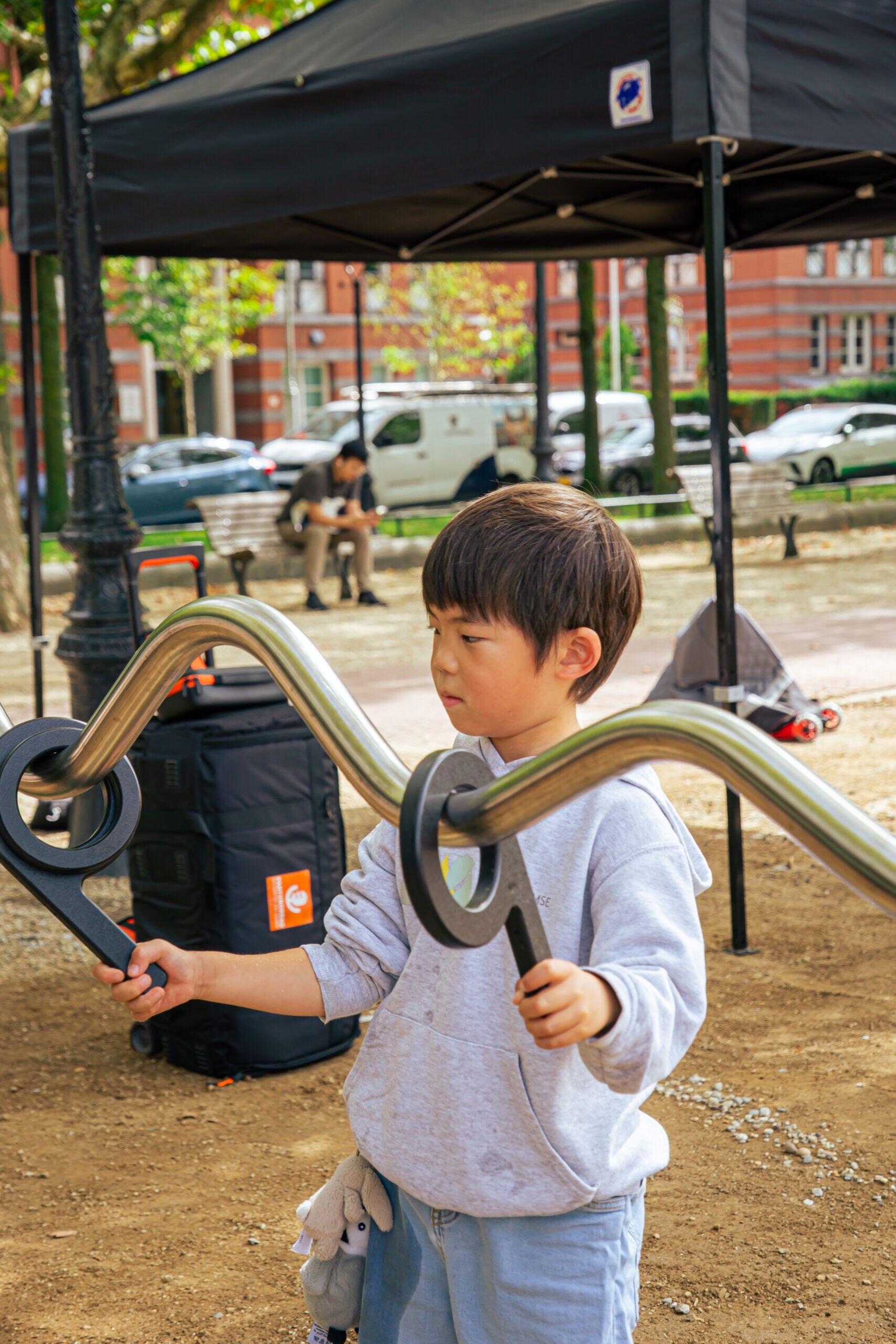
A light, dynamic element that encourages balance, crossing and agility.
- Notes can be repositioned.
- The wire maze demands precision, control and concentration.
- Ideal as an ‘in-between’ play feature, frequently used even by passing teenagers.
Inclusive features that strengthen the whole design
Beyond the equipment itself, the play area has been designed with careful attention to accessibility and safety:
- Wide paths suitable for pushchairs and wheelchairs.
- A soft EPDM surface with calming colour accents that complement the surroundings.
- Clear sightlines, ensuring supervisors have a full overview—something Sanne prioritised from the outset.
A multifunctional space where everyone can join in
Alongside its artistic character, inclusivity was a core requirement. Museumplein is busy, open and diverse, so the play area needed to accommodate all ages and all levels of mobility.
Sanne translated this into a subtle yet effective zoning strategy:
-
Safe, low zones for toddlers.
-
Challenging play routes for older children, weaving around the rock formations—perfect for running, climbing, scooting and hiding.
-
Social spaces for parents and grandparents.
-
Flow zones connecting to walking paths, allowing the play area to blend naturally into the square.
“A play area must offer room for different ages and different types of play. Children should be able to meet, help and inspire one another.”
Ronald adds:
“Inclusivity means everyone can play together. Parents, grandparents, children—everyone can become part of the play experience here.”
A design that respects the square
Museumplein is known for its strong sightlines and iconic visual character. The Rijksmuseum in particular shapes the entire view. The play area therefore needed to complement rather than dominate.
Sanne: “The Rijksmuseum is the square’s main focal point. The play area couldn’t distract from that. That’s why we considered colour, height and open sightlines so carefully.”
The colours of the equipment tie in with the bistro across the square, the lampposts, and the natural tones of the landscape.
The result is a design that feels almost self-evident—like it has always belonged there.
Once the design was approved and the equipment produced, BOERplay’s installation team stepped in: the crew responsible for placing and constructing the play area.
A festive opening: a square that comes alive
The opening confirmed what everyone hoped for: the design works. Children climbed, slid, balanced, made sounds and invented new games and routes—many of which no one could have predicted.
Ronald:
“The reactions were fantastic. The square truly breathed play, movement and connection. Exactly what this place was meant for.”
A play area that continues to inspire
Since the opening, the new play area has been used intensively every day. Children push their boundaries, people meet each other, and the square feels richer and more vibrant—without losing its calm or character.
Thanks to the thoughtful concept devised by Sanne, the product design by Melissa and the close collaboration with the municipality of Amsterdam, a play area has emerged that not only suits Museumplein but also adds lasting value.
It’s a place where play, art, music and social interaction come together—right in the heart of the city.
Your play area deserves a unique design concept too
Get in touch with one of our advisers.

