


Installing playground equipment efficiently: how we do it
Designing a playground is one step in the process. The playground equipment then needs to be assembled, anchored, and safely handed over on site. This requires careful preparation and an installation method that suits the equipment, the soil conditions, and the chosen surfacing.
That is why we consider practical installation from the development stage of our playground equipment. Wherever possible, we prepare components in advance and choose anchoring methods that reduce the amount of work required on site.
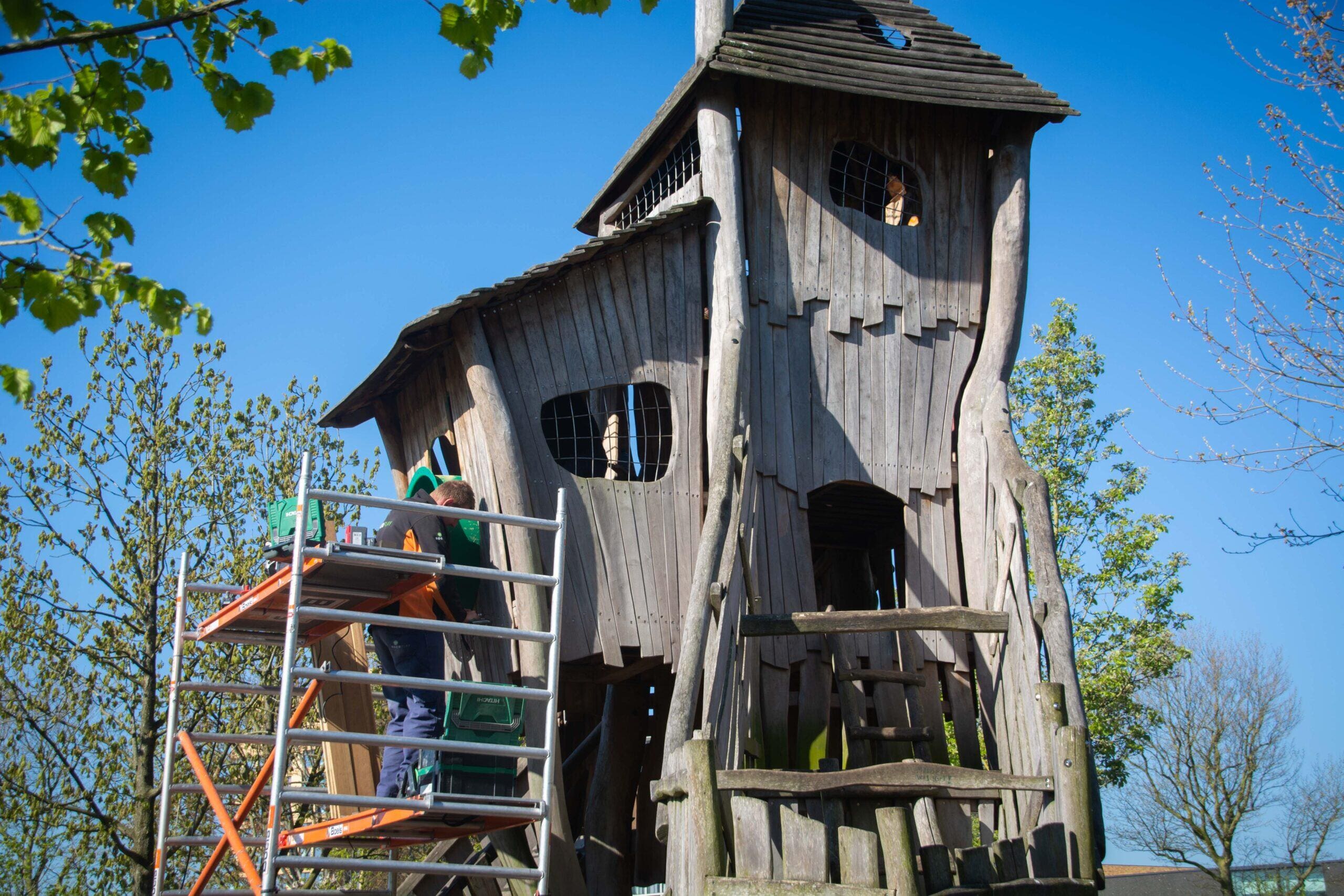
Many of our playground units are delivered largely pre-assembled. Components that can be assembled beforehand are put together before they are transported to site. This means the installation team has fewer individual components to assemble on site. It makes the installation process more straightforward and reduces the time required to install the equipment. For various types of playground equipment, we can install the foundations directly into the ground. Holes are drilled at the positions of the posts, after which the equipment is securely anchored. For smaller elements, such as play panels and horizontal bars, a hand-operated auger can be used. For larger equipment or where a larger drilling diameter is required, we use a drilling unit mounted on a loader or mini excavator. This method reduces the amount of excavation required around the equipment. This is particularly useful when disturbance to the ground around the playground needs to be kept to a minimum and the site needs to be available for use again soon after installation. Stable anchoring also provides an important foundation for surfaces such as artificial grass and wet-pour surfacing. A properly installed foundation helps to prevent movement and settlement of the equipment. Drilling is not the most suitable solution for every piece of equipment or every situation. For certain playground units, we therefore also use timber foundation frames. These frames are installed in the ground and form the base on which the equipment is mounted. Excavation is only required where the frame itself is positioned. This keeps ground disturbance to a minimum and can often reduce or eliminate the need for concrete. It also offers advantages when playground equipment is replaced in the future, as less foundation material needs to be removed from the ground. We determine the most suitable anchoring method based on the equipment, its construction, the soil conditions, and the surfacing surrounding the equipment. For installation, we work with experienced regional installation partners. These are companies with expertise in playground construction and outdoor works. We select a suitable partner for each location. This means it is clear in advance who will carry out the installation and ensures that the chosen method suits the conditions on site. Before installation begins, we coordinate the key site conditions. For example, we consider access for machinery, the exact position of the playground equipment, and any known cables, pipes, or particular ground conditions. This allows the installation team to start work well prepared and helps us avoid unnecessary work during installation. The playground equipment is installed in accordance with the applicable standards, including DIN EN 1176 and DIN EN 1177. Work surrounding the equipment, such as the installation of impact-absorbing surfacing or edging, is agreed with the client in advance. Once installation has been completed, we check together with the client whether the work has been carried out as agreed. The handover is then documented in writing. In this way, we guide the process from preparation and installation through to the safe handover of the completed playground. Planning a playground and wondering which installation method is best suited to your site? Contact our advisers to discuss the possibilities. 
Delivered largely pre-assembled
Anchoring by drilling into the ground
Anchoring with timber frames
Installation by experienced specialists
Good preparation on site
From installation to handover

