


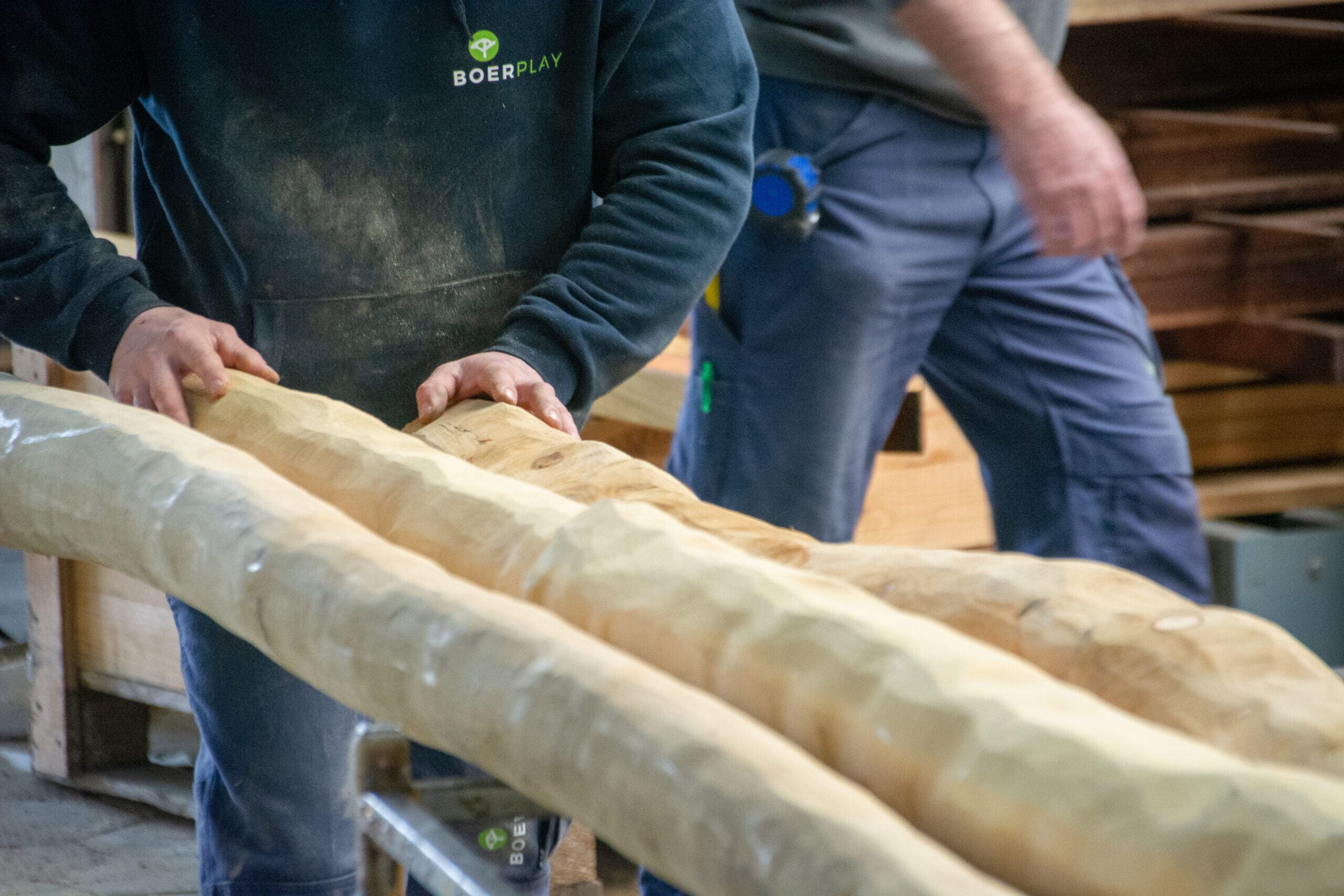
The right material strengthens the design
A natural playground is about much more than play equipment. The materials used influence how a playground looks and feels, how long it lasts and how children interact with it. That is why more and more municipalities, schools and leisure businesses are choosing robinia wood.
This type of wood combines a warm, natural appearance with an exceptionally long lifespan. The characteristic irregular shapes of the trunks also create play equipment that blends naturally into its surroundings. Instead of standardised structures, they create natural play opportunities that encourage children to climb, balance and explore.
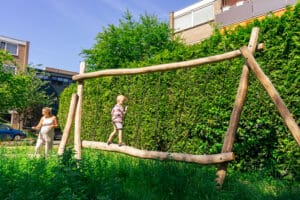
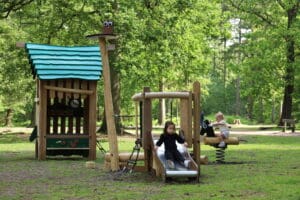
Robinia wood comes from Robinia pseudoacacia, also known as black locust or false acacia. The tree originates from North America but has been grown in Europe for many years. The wood is considered one of the most durable European hardwoods and is widely used in applications where a long lifespan is important. There are good reasons for this. Robinia wood is naturally resistant to moisture, fungi and insects. As a result, chemical wood preservation is generally unnecessary. According to the European standard EN 350, robinia wood falls within durability class 1–2, the highest class for European wood species. We exclusively use FSC®-certified robinia wood. This means the wood comes from responsibly managed forests, where nature conservation, biodiversity and climate protection are considered alongside social and economic responsibility. This combination of durability, strength, natural resistance and responsible sourcing makes robinia wood an ideal choice for play equipment that is intensively used for many years. Public playgrounds need to withstand intensive use. They are used by many children every day and are exposed to changing weather conditions throughout the year. Municipalities therefore look for materials that last a long time, require relatively little maintenance and blend naturally into green surroundings. Robinia wood meets these requirements. Its natural appearance works particularly well in parks, residential areas and school grounds, while its high durability helps play equipment retain its quality for many years. This makes robinia wood a sustainable investment in public space. Design freedom is another important advantage. The naturally irregular trunks do not conform to straight lines. This allows designers to create play equipment with different heights, varied climbing routes and organic shapes that give each playground its own character. Children see play equipment very differently from adults. They do not see a wooden structure, but a tree to climb, a lookout point or an exciting route to the other side. The natural shapes of robinia wood encourage this kind of open-ended play. There is often more than one way to use a piece of play equipment. Children find their own routes, assess risks, help each other and continually invent new ways to play. This means the same playground can offer new possibilities every day. Natural play also encourages different movements compared with playing on a straight, symmetrical structure. Balancing along a curved trunk, climbing across different heights or discovering a new route challenges coordination, creativity and self-confidence. This variety is exactly what makes natural playgrounds so valuable. For us, designing a playground does not start with choosing a material. We first consider the location, the surroundings and how children will use the playground. Only then do we select the material that best supports the design. For natural playgrounds, robinia wood is often an ideal choice. The characteristic shapes of the trunks give our designers the freedom to create varied height differences, playful routes and natural play opportunities. This results in playgrounds that support different ways of playing and encourage children to climb, balance, explore and create their own play. Robinia wood is therefore much more than a durable construction material. It gives us the freedom to design playgrounds that blend naturally into their surroundings, stand the test of time and encourage children to keep playing outdoors. 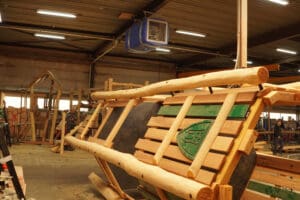
What is robinia wood?
Why do so many municipalities choose robinia wood?
What does this mean for children?
Why do we use robinia wood?

