


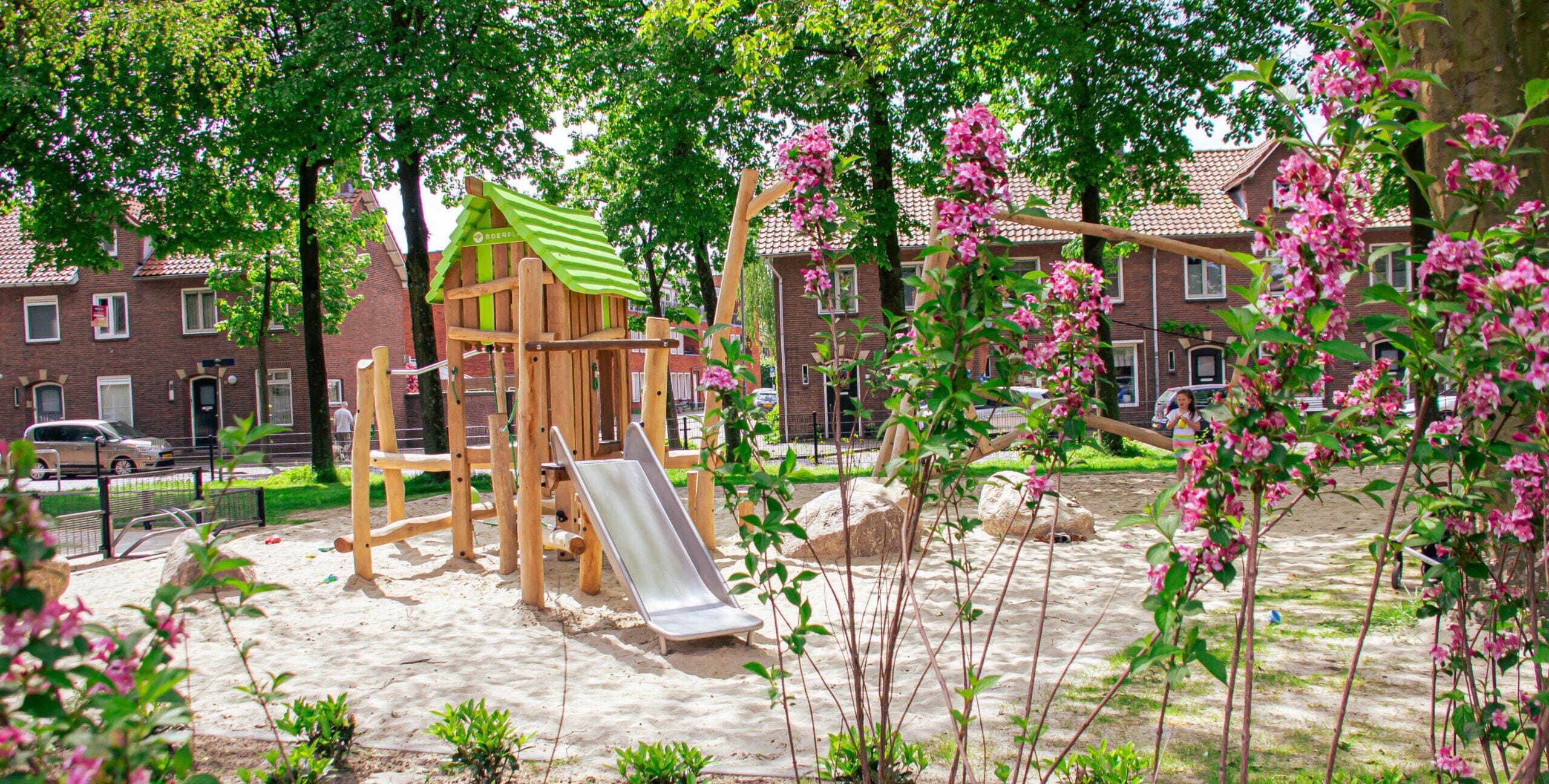
When designing a playground, there is much more to consider than simply choosing the right play equipment. At BOERplay, we design and create complete landscapes in which every element contributes to the experience of playing, discovering, and connecting. The planting plan is an essential and indispensable part of this. Within our team, our landscape designer Frederike is the specialist in planting.
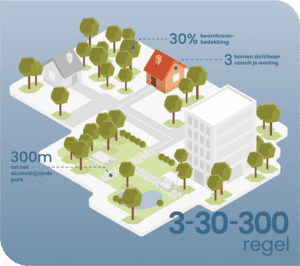
Frederike’s interest in everything that grows and blooms started at home. Her parents were biologists, and she often went out with her mother to study plants and flowers. When the time came to choose her education, she wanted to combine creativity with her love for nature. This led her to the study program Garden and Landscape Design. She built a strong foundation there, but learned the most in practice, through doing, observing, and learning from experienced colleagues. With so much knowledge, you might think Frederike knows everything by now, but she sees it differently. “The more you learn about planting, the clearer it becomes that there is still so much more to discover,” she explains. “To keep my knowledge up to date, I am a member of the KVBC, an association of growers and plant enthusiasts who share articles and insights on the latest developments in the field.” Her passion for planting doesn’t stop after work. “We bought our house mainly because of the large garden. The house itself needed a lot of renovation and wasn’t particularly impressive,” she says with a laugh. The nature around her makes her visibly happy; it’s where she finds daily inspiration and energy. Within the landscape design team, everyone is capable of creating a planting plan, but colleagues are often supported by Frederike. She thinks along about which species are most suitable and advises on specific choices. “Recently, a colleague told me he wanted to include climbing plants in his design but wasn’t sure which species would be appropriate. On a playground, we absolutely cannot use toxic plants, because children might put them in their mouths. I was able to quickly help him with a suitable solution,” she says. On older playgrounds, you often see just a few pieces of equipment, sometimes with a small grass field and a pair of goals. Thankfully, those times are behind us. A good playground involves much more than placing equipment. “My childhood memories of playing are mostly linked to nature: building huts and climbing trees,” Frederike recalls. “Planting is what truly brings a natural playground to life.” Especially in paved environments such as cities, a green playground can make a significant difference to its surroundings. Research by the RIVM (2022) shows that greenery in living environments has positive effects on both physical and mental health. Green spaces can reduce the harmful effects of air pollution and heat. They also support recovery by reducing stress and improving concentration. Green surroundings encourage more physical activity and social interaction as well. It is clear that flowers and plants are not just decorative. But did you know they also contribute to children’s development? “By touching, smelling, seeing, and hearing, children gain sensory experiences that are important for their motor and cognitive growth,” explains Frederike. “Contact with plants encourages curiosity and exploratory learning: children discover insects, see how plants grow, and learn playfully about ecosystems and seasons.” Green playgrounds also invite varied and active play, strengthening motor skills, creativity, and social abilities. Playing outdoors in a natural environment improves concentration and reduces stress, helping children develop better. As mentioned earlier, toxic plants are absolutely not allowed on a playground. But of course, that’s not the only thing we consider. When designing a planting plan, our landscape designers look at several aspects: • Experiencing the seasons: plants that change throughout the year. What are native plants and why are they important? Native plants are species that originate from the Netherlands or have been growing here for a very long time. These species have not been modified or bred by growers. Because they have been part of our ecosystem for centuries, they each have their own role within it. Animals and insects often depend directly on these species for survival. Frederike gives the example of the oak tree: Does that mean non-native plants are bad? “No, definitely not! Native plants are indeed better for the Dutch ecosystem, but there are other considerations as well. For a school, it may be important to use plants with different scents and textures so that children can learn from them in a meaningful way. In an urban playground, the focus is often on plants that bloom for a long period, so visitors can enjoy color throughout the season. These are often non-native or specially cultivated species. That is why it’s important to always look at the purpose of the playground.” Trends and developments According to Frederike, there are several trends and developments in planting that play an increasingly important role in designing green and sustainable playgrounds: Summers in the Netherlands are becoming increasingly warm. Where we used to have only a few hot days, we now regularly face heatwaves that last longer and occur more often. Our climate is changing, and we all feel the effects. Along with heat, we also experience more periods of heavy rainfall. In densely built neighborhoods, rainwater often cannot drain away, causing streets and playgrounds to flood. By integrating features such as swales, rainwater can be naturally collected and slowly absorbed into the ground. Another solution is underground water storage, which releases water back into the soil during dry periods. “These changes in the climate also mean that planting needs to be more resilient. Plants must be able to tolerate wet conditions as well as longer periods of drought.” A widely used guideline for making living environments greener is the 3-30-300 rule. This rule helps cities, municipalities, and designers understand the tangible benefits of greenery. The principle is simple: everyone should be able to see at least three trees from their home, every neighborhood should have at least thirty percent tree canopy, and no one should live more than 300 meters from a public green space. This guideline emphasizes that greenery is not a luxury, but a basic requirement for a healthy living environment. More greenery means more shade, cleaner air, higher biodiversity, and a more pleasant place to play, move, and relax. What becomes clear from all of this is that planting is far more than just a decorative element of a playground. It forms the foundation for experience, health, biodiversity, and connection with nature. Thanks to the knowledge and passion of specialists like Frederike, playgrounds become not only functional but also lively and meaningful. She sees every day how plants can transform a space and bring people closer to nature. Who is Frederike?
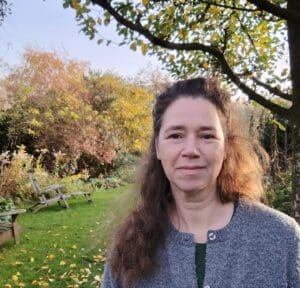
What role does Frederike have within the landscape design team?
Why is planting so important on a playground?
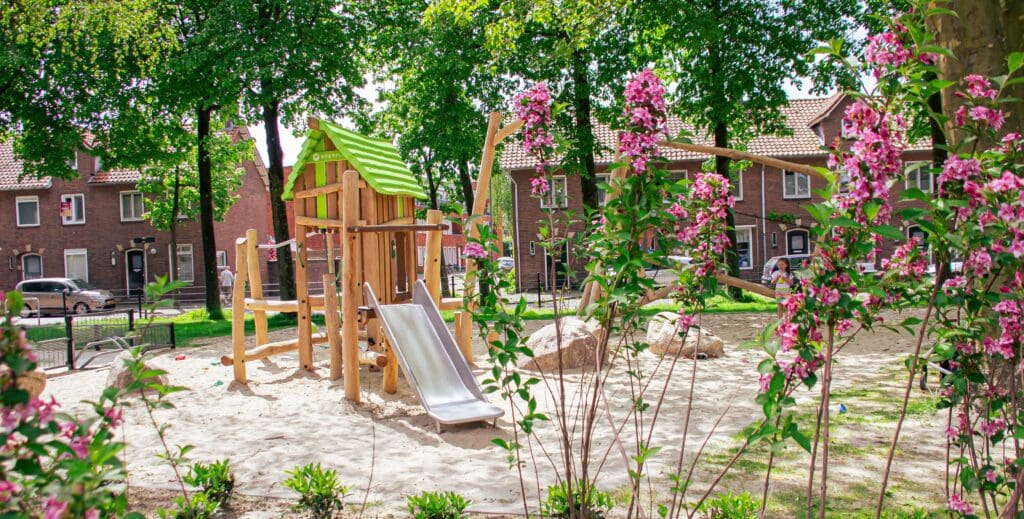
What kind of planting do you use on a playground?
• There should always be something to see, even in winter, such as winter bloomers or evergreen plants.
• The planting must match the purpose and function of the playground.
• Native plants are an important component.
• Even in winter, there should still be some greenery visible.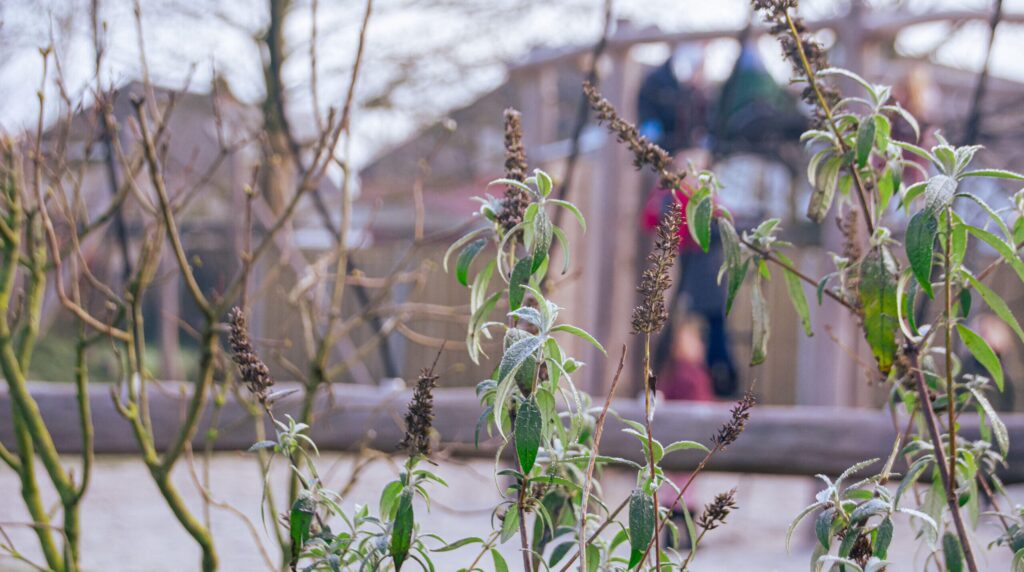
“A Dutch oak, such as the Pedunculate Oak, is an important food source and shelter for hundreds of species of insects, fungi, birds, and mammals. If you look at an American oak, there are far fewer species associated with it, which means its ecological value is much lower.”
Climate adaptation and heat stress
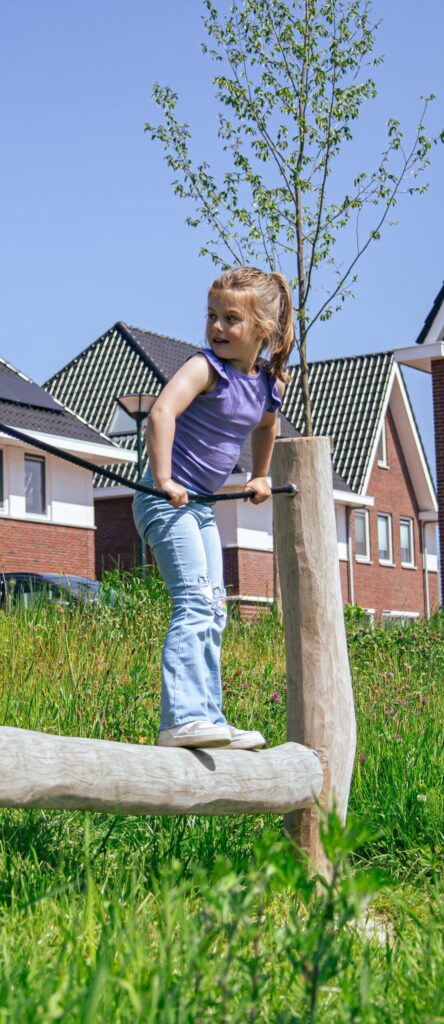
“Planting on playgrounds can play a surprisingly effective role here. By adding trees and shrubs, more shaded areas are created,” Frederike explains. “Additionally, grass as a ground surface is much cooler than paving or asphalt, which greatly improves play comfort.”The 3-30-300 rule
“The thing I love most about my work,” Frederike says, “is that you genuinely add something and can really see people enjoying it.”
That is exactly what BOERplay is all about: creating places where people and nature grow together.

